Why 2026 Marks the Return of Jade to Meaning
For much of the past decade, fine jewelry has been defined by visibility.
Brilliance.
Instant impact.
Materials chosen to be noticed first.
Diamonds dominated the conversation, followed closely by colored gemstones selected for saturation and sparkle. Jewelry became louder, faster, and increasingly seasonal.
But as we move toward 2026, something is quietly changing.
We are seeing jade move back into fine jewelry conversations —
as a return to values that were never meant to disappear.
Jade is re-emerging as a modern heirloom.
Not because fashion shifted overnight, but because priorities did.
Beyond Loud Luxury
Today’s clients are choosing differently.
They are buying fewer pieces, but with more intention.
They are asking how jewelry ages, not just how it photographs.
They are drawn to materials that carry meaning, history, and longevity.
Symbolic value is beginning to matter more than loud luxury.
In this context, jade feels unexpectedly modern.
Not flashy.
Not attention-seeking.
But deeply present.
A Material Rooted in History
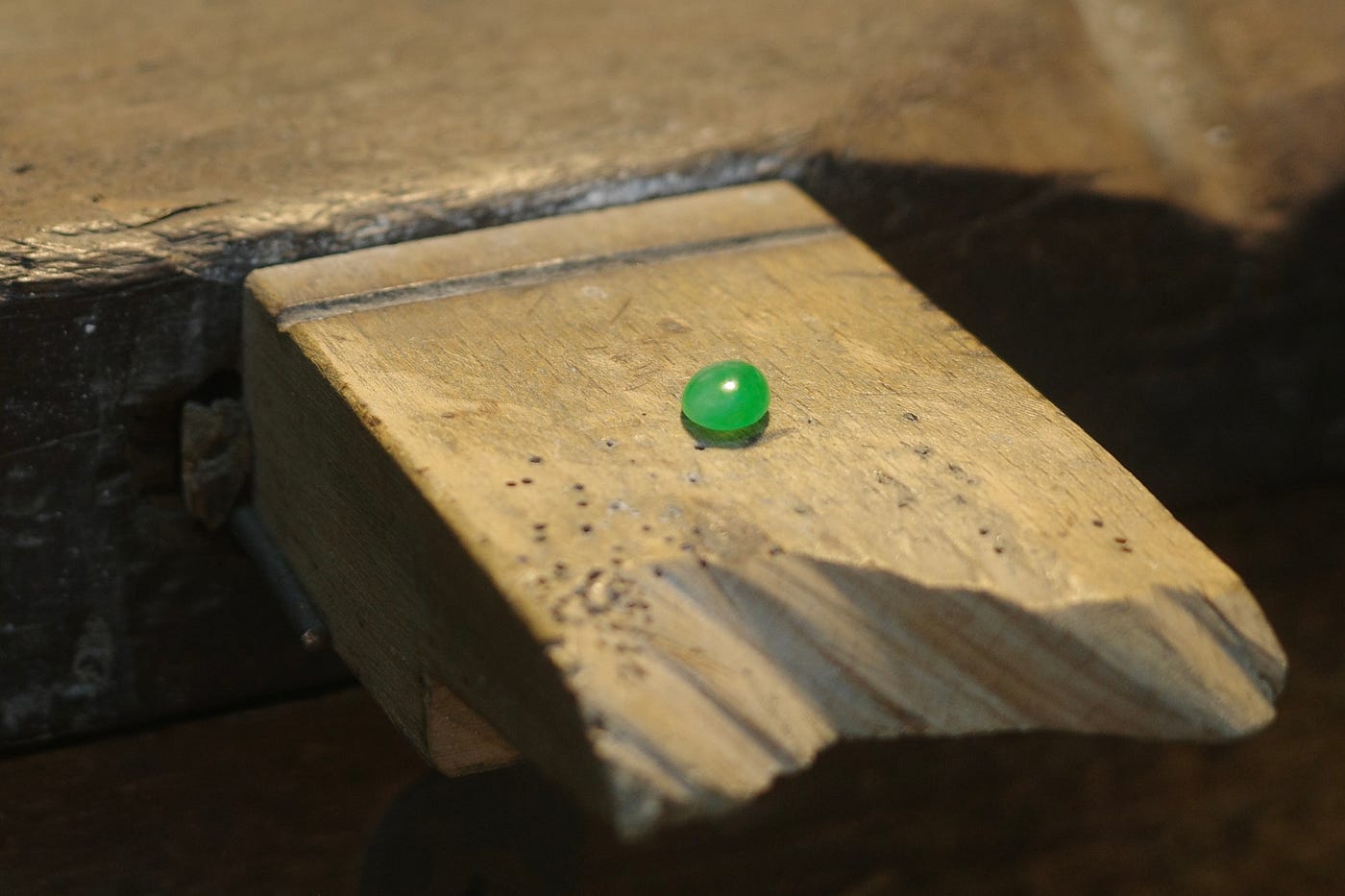
In East Asia, jade has never been just another gemstone.
For thousands of years, it has been associated with virtue, balance, protection, and continuity. Ancient Chinese texts describe jade as a material that reflects moral character — calm, restrained, and enduring.
Unlike gemstones prized for brilliance, jade was valued for how it felt against the body, how it aged over time, and how it accompanied a person through different stages of life.
Jade was not worn to impress others.
It was worn to accompany oneself.
That distinction matters.
Where East Meets West
Western fine jewelry developed around visibility and structure.
Gold was engineered for form.
Diamonds were cut for light.
Craftsmanship emphasized precision, geometry, and durability.
Eastern jade culture approached jewelry differently.
Beauty was quiet.
Value was internal.
Meaning outweighed spectacle.
At HN Jewelry, jade sits exactly at this intersection.
Eastern material philosophy meets Western craftsmanship.
Cultural symbolism meets modern engineering.
History meets contemporary restraint.
Style, with values.

Why People Wear Jade
Across generations, jade has been worn for many reasons.
Some wear it as a symbol of protection. Some for balance and calm. Some as a reminder of continuity — something that stays, even as life changes.
There is a long-held belief in Chinese culture that jade “grows with its wearer.” A saying often repeated is: 人養玉,玉養人 — the person nurtures the jade, and the jade nurtures the person.
This belief extends into how jade is perceived during different life phases.
When life feels smooth, jade is said to appear more luminous — clearer, warmer, more alive.
When life becomes difficult, jade is worn for steadiness and protection, sometimes believed to absorb hardship on behalf of its wearer.
These interpretations are cultural, symbolic, and deeply human.
The Traditional Explanation
In traditional Chinese medicine and philosophy, the human body is understood to carry q(氣)— a vital life energy.
Jade, worn close to the skin, is believed to interact with this energy. Over time, it is thought to reflect the state of its wearer.
A person in balance is said to “nourish” the jade.
A person under strain is said to rely on jade for support.
This is not presented as a scientific mechanism, but as a way of understanding the relationship between object and life.
Jade is not separate from the wearer.
It participates.
A Rational Perspective
From a practical standpoint, jade does change over time — but in ways that can be explained.
Jade is worn directly against the skin. It is exposed daily to body warmth, natural skin oils, moisture, and movement.
Over long periods, these elements interact with the stone’s surface, gradually filling microscopic textures and softening its appearance. This process gives jade a smoother sheen and a more “oily,” translucent look.
This is why jade that is worn often — and cared for properly — tends to look more vibrant than jade that sits untouched.
There is also a human element.
When someone feels well, grounded, or calm, they tend to notice details.
They clean their jewelry more carefully.
They handle it with intention.
During stressful or difficult periods, objects are often treated differently — worn less consciously, handled more roughly, or simply overlooked.
Over time, these differences become visible.
Where Meaning Is Assigned
Culturally, these physical changes were never viewed as accidental.
Rather than separating object and wearer, jade was understood as something that ages alongside a person — shaped by time, contact, and care.
The belief that jade becomes more beautiful during good times, or offers protection during difficult ones, is not about superstition.
It is about interpretation.
It is a way of giving meaning to the visible effects of time, attention, and experience.
Jade does not change fate.
It records life.
Jade in Modern Fine Jewelry
Historically, jade was worn in traditional forms — bangles, pendants, carvings rich with symbolism.
Today, jade is entering a new chapter.
Modern fine jewelry allows jade to be:
- Framed by clean gold structures
- Balanced with diamonds rather than overwhelmed by them
- Designed for daily wear, not ceremonial occasions
- Engineered for longevity, comfort, and proportion
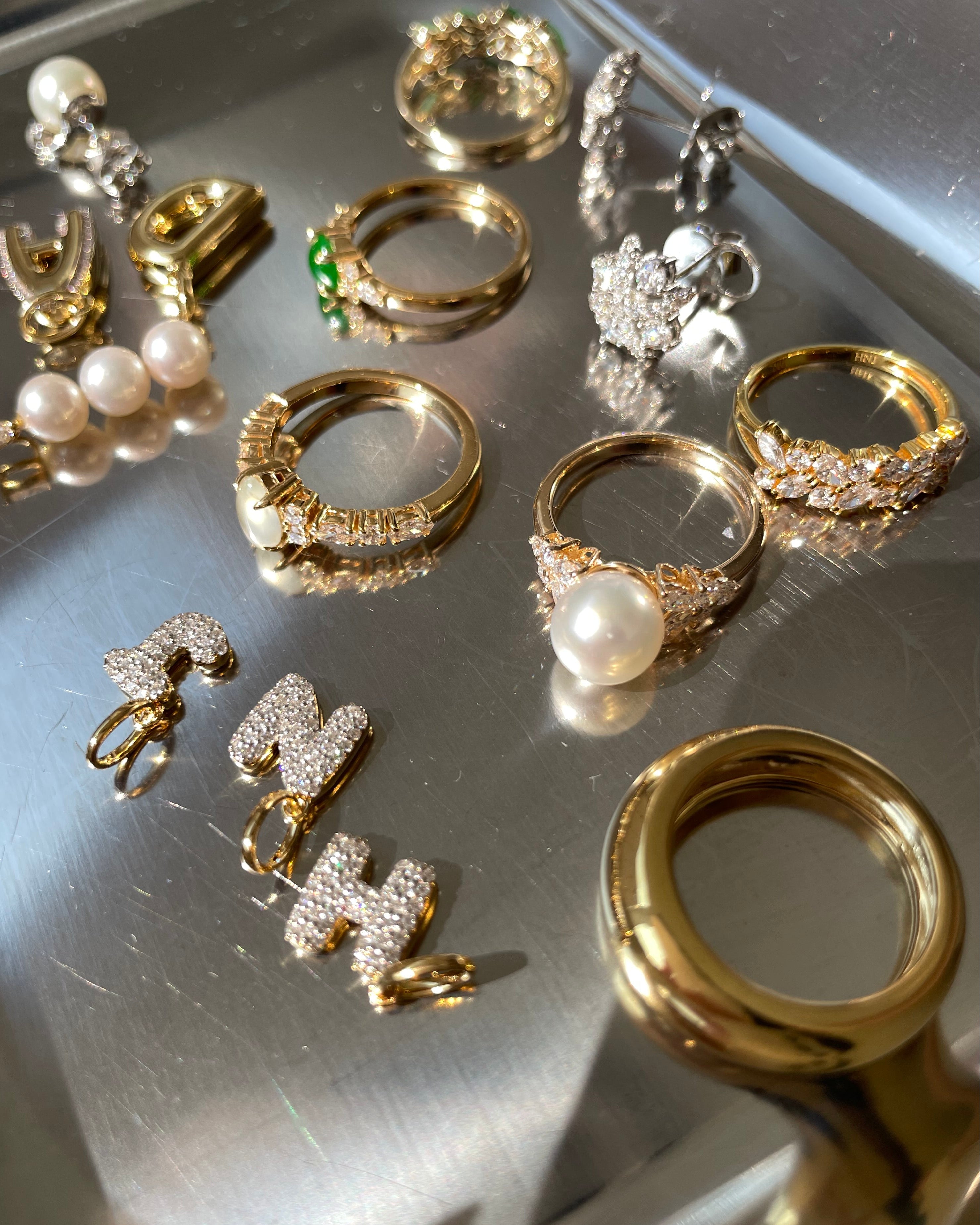
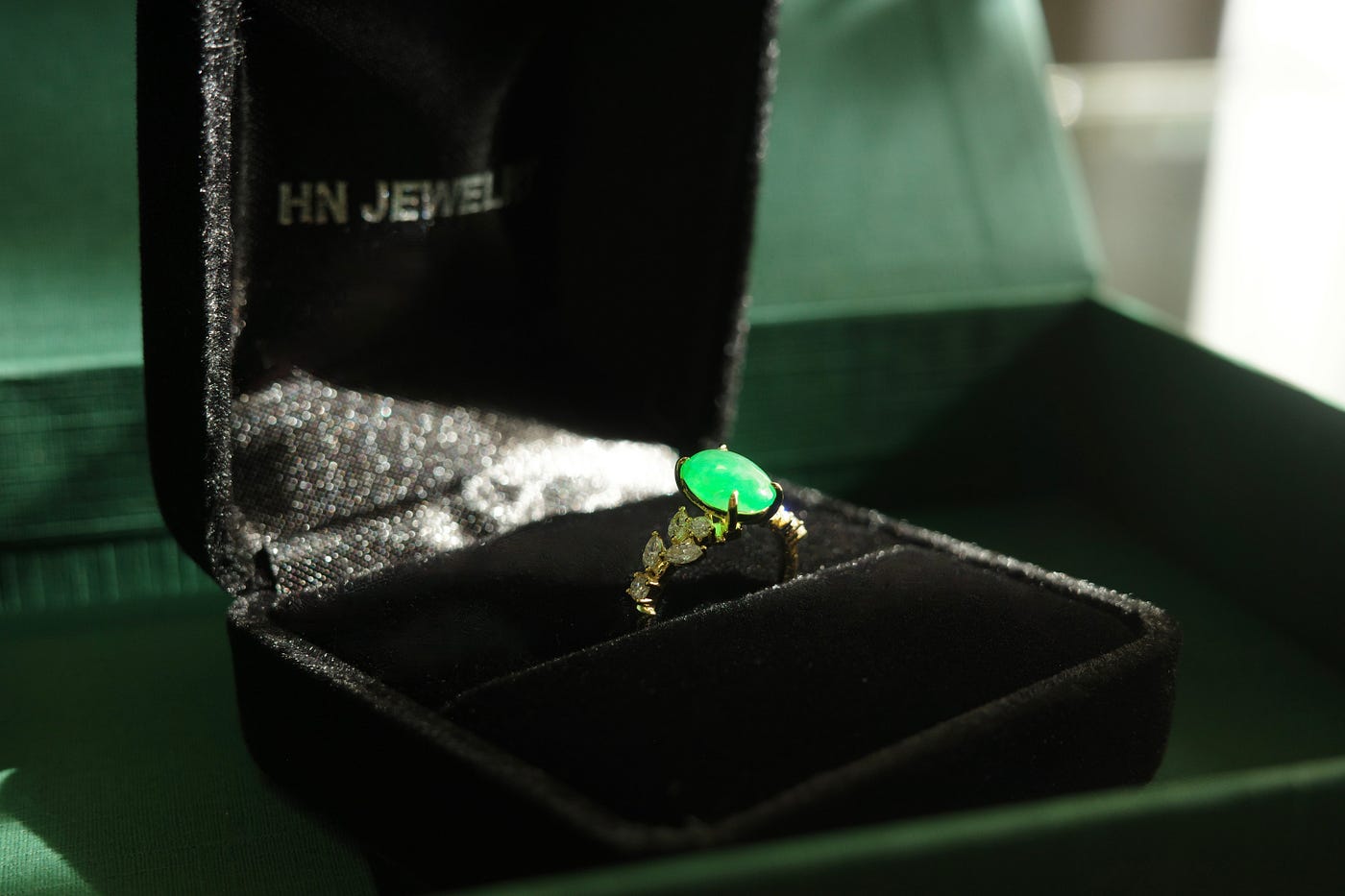
At HN Jewelry, jade is treated as a centerpiece, not an accent.
We focus on structure, restraint, and balance — allowing jade to speak without excess.

Why 2026 Matters
As we move toward 2026, the return to jade is not about fashion cycles.
It reflects a broader shift toward:
- Longevity over novelty
- Meaning over noise
- Materials that age with dignity
Jade fits naturally into this moment.
Not because it is new, but because the time has come.